Lotus: sourcing & communication
A contact point for inquiry consolidation, quotation coordination, document communication and delivery follow-up.
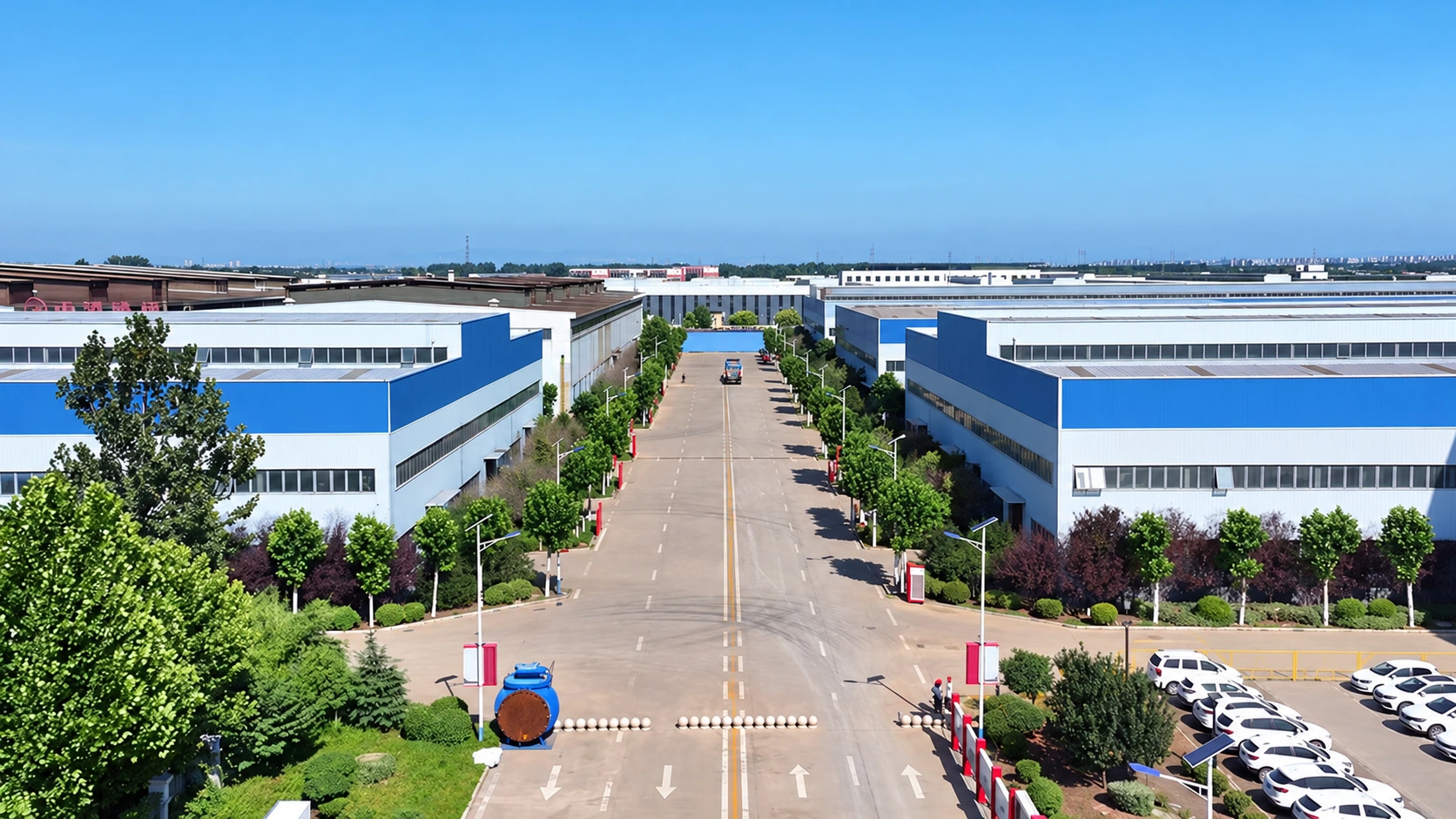
An aerial perspective of the production environment.
MEET LOTUS GLOBAL TRADE
Lotus Global Trade brings together industrial valve solutions for pipeline, chemical, power and water applications. Explore isolation, non-return and flow-control product families, with a clear path from product discovery to a structured project inquiry.
MANUFACTURING FACILITY PROFILE
A profile of the manufacturing operations, technical resources and production capabilities described in the supplied factory information.
The factory is located in the Panggezhuang Industrial Development Zone, west of the Jingkai Expressway in Daxing District, Beijing. The site covers nearly 300 mu, equivalent to approximately 200,000 square metres.
The workforce comprises 780 employees, including 79 engineering and technical personnel, 40 middle- and senior-level managers, 430 production workers and 180 sales personnel. Its technical team includes members of the National Technical Committee on Valve Standardization, members of the valve expert committee associated with the former General Administration of Quality Supervision, Inspection and Quarantine, and technical correspondents. The facility serves as a Beijing valve technology research and development centre, supported by a broad pool of specialist expertise.
Management and product quality are central to its operations, with ongoing attention to workforce development, quality management systems and quality control. The factory has also been included in the materials supply networks of China National Petroleum Corporation, Sinopec and the former State Power Corporation.
The following milestones are recorded in the supplied factory profile.
The production centre comprises divisions for ball valves, general-purpose valves, butterfly valves, steam traps, forged-steel valves, special-purpose valves, and valve maintenance and repair. Each division has its own testing and inspection equipment. Five production workshops provide an annual production capacity of approximately 36,000 tonnes.
The product portfolio includes steam traps, emergency shut-off valves for liquefied petroleum gas, oxygen-service valves, gate valves, globe valves, ball valves, check valves, butterfly valves, high-temperature and high-pressure control valves, cryogenic valves, and ultra-supercritical high-temperature and high-pressure valves for power generation.
The supplied profile distinguishes the broader production envelope from the stated range of its main product series. Ratings depend on the specific product, material and construction; the ranges below do not imply that every valve is suitable for every combination.
| Scope | Pressure | Temperature |
|---|---|---|
| Broader production envelope | 1.0–76 MPa; Class 150–4500 | −196°C to 800°C |
| Main product series | 1.0–42 MPa | −196°C to 570°C |
The main portfolio spans high-, medium- and low-pressure valves across 10 major categories, 518 series and 2,918 specifications. These include gate, globe, check, ball, butterfly, control, cryogenic and API valve ranges, together with steam traps, LPG emergency shut-off valves and valves dedicated to oxygen pipelines.
Materials include cast iron, carbon steel, alloy steel, heat-resistant steel, low-temperature steel and stainless steel. Operating and control arrangements include manual, gear-driven, electric, pneumatic, hydraulic and automatic configurations.
Products are manufactured to applicable GB and JB standards, as well as API, ANSI, JIS, DIN and BS standards. Applications include petroleum, natural gas, chemicals, metallurgy, mining, food processing, pharmaceuticals, municipal infrastructure, power generation and building materials. Part of the production is supplied to export markets.
The facility is equipped for manufacturing and performance testing, including steam-trap performance assessment, excess-flow testing of emergency shut-off valves, and sealing and strength testing of general-purpose valves.
Physical, chemical and metrology facilities support measurement traceability and verification of the chemical composition of metallic materials. Energy-saving product development is a longstanding focus, particularly in steam traps; the factory profile identifies the operation as one of China's early steam-trap manufacturers.
A dedicated valve research institute conducts research and development into new products, technologies and manufacturing processes. Its organization includes general-valve and steam-trap research offices, together with technical standards, technical information and technical archives offices.
The institute maintains a technical library containing more than 10,000 technical books and over 2,000 standards volumes. It has undertaken valve-standard development and academic research assignments commissioned by national authorities, the former Ministry of Machinery Industry and valve industry associations. Its activities also include technical exchanges with manufacturers and professional organizations in China and overseas, international research visits and technology introduction.
UPSTREAM MATERIALS & SUPPLY CHAIN
Established in March 2016 in Cheng'an County, Handan, Hebei Province, the Handan production base represents a total investment of RMB 510 million. It occupies 480 mu, approximately 320,000 square metres, with 135,000 square metres of factory floor area.
Integrating precision casting and forging, the base supplies semi-finished raw-material components and has an annual capacity of approximately 30,000 tonnes of blanks and forgings. This upstream capability supports control of raw-material quality and cost while strengthening the product supply chain.
VALVE SOURCING & EXPORT
Lotus Global Trade supports industrial valve and valve-ball sourcing, technical requirement communication and export coordination. Contact our Haikou office to discuss the products, drawings and delivery needs for your project.
A contact point for inquiry consolidation, quotation coordination, document communication and delivery follow-up.
Manufacturing, machining and testing are performed by the corresponding production facility. The manufacturer and certificate issuer are identified in the project documents.
Selected model, technical deviations, inspection scope, commercial terms and responsibilities are confirmed with the quotation and order.
Factory photographs and videos show product and production environments. The facility applicable to a particular order is confirmed during sourcing and quotation.